Why You Need a Hydraulic Separator and How It Works
A boiler and several pump groups without pumps «fighting» each other: we explain on a diagram what a hydraulic separator does, when you need one and how to size it.
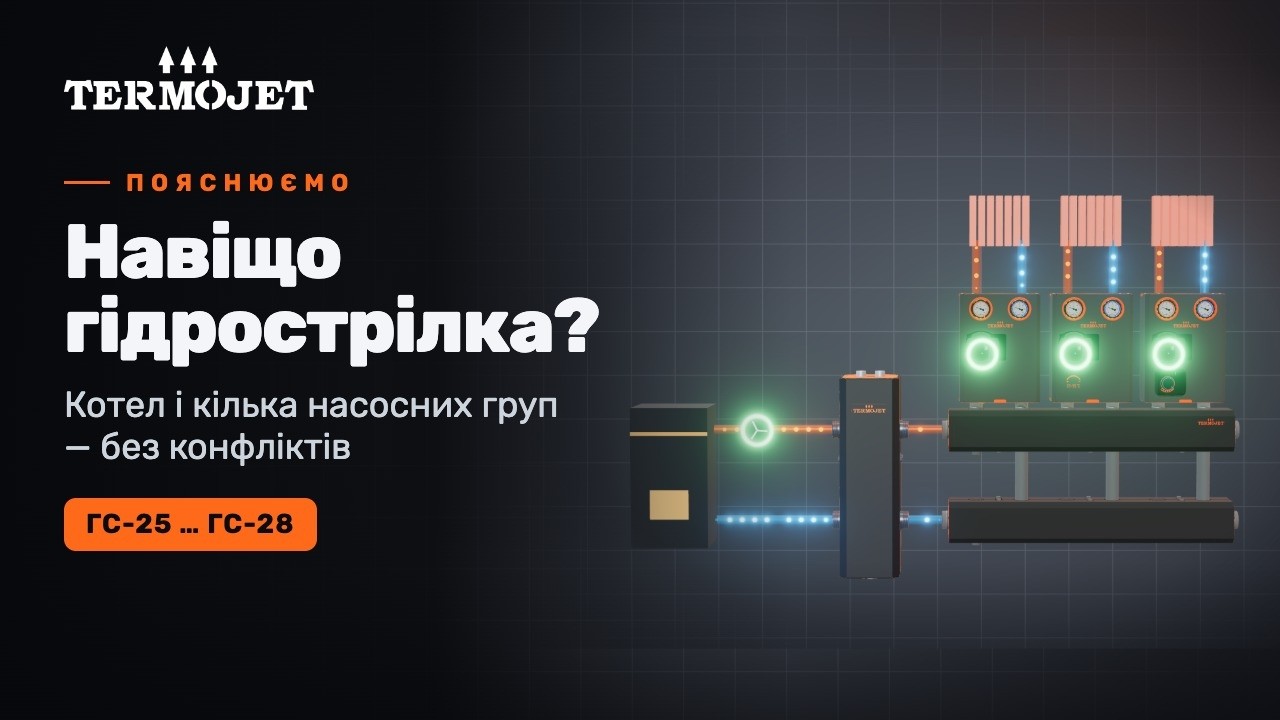
When a boiler room has one circuit — a boiler and radiators — the boiler's circulation pump copes on its own. But as soon as there are several circuits with their own pumps (radiators, underfloor heating, a DHW cylinder), they start to affect each other: one pump «pulls» the flow, another gets too little, and the boiler runs in fits and starts. To prevent this, a hydraulic separator is installed between the boiler and the consumers.
How a hydraulic separator works
A hydraulic separator is a vertical vessel with a large cross-section. The boiler circuit (primary) is connected on one side and the consumer circuits (secondary) on the other. The flow velocity inside is low, so a zone with almost zero pressure difference is created. As a result, each pump works only «for its own» circuit and does not affect the others.
- The boiler flow is greater than the consumer flow — the surplus hot water goes down through the separator and back to the boiler. The boiler does not overheat or shut down because of closed circuits.
- The consumers need more than the boiler supplies — some return water is mixed into the supply inside the separator. The pumps get their design flow and the boiler runs steadily.
- The flows are equal — water passes straight through with almost no mixing.
What else a Termojet hydraulic separator does
Termojet hydraulic separators have a built-in air separator and sludge trap: microbubbles rise to the air vent, while dirt settles at the bottom and is drained through a valve. There is a pocket for a temperature sensor for the boiler room controls, and the thermal insulation reduces heat loss.
When you need a hydraulic separator
- the system has two or more circuits with their own pumps — radiators, underfloor heating, a DHW cylinder;
- a boiler with its own pump (including a wall-hung gas boiler) or a cascade of several boilers;
- a solid fuel boiler or a heat pump that needs a stable flow through its heat exchanger.
How to choose the size
What matters most is the maximum flow rate and the system output. Guide values for threaded insulated separators:
- HS-25, 1″ — up to 25 kW at ΔT=10 °C (up to 50 kW at ΔT=20 °C);
- HS-26, 1¼″ — up to 60 kW (up to 90 kW);
- HS-27, 1½″ — up to 95 kW (up to 145 kW);
- HS-28, 2″ — up to 150 kW (up to 250 kW).
For larger boiler rooms there are flanged separators with a base. Read more about sizing in «How to Choose a Hydraulic Separator for Your Boiler Room», and about the difference between a separator, a manifold and a combined unit in «Hydraulic Separator, Manifold, or Combined Unit: What to Choose and When».
The hydraulic separator as part of the boiler room
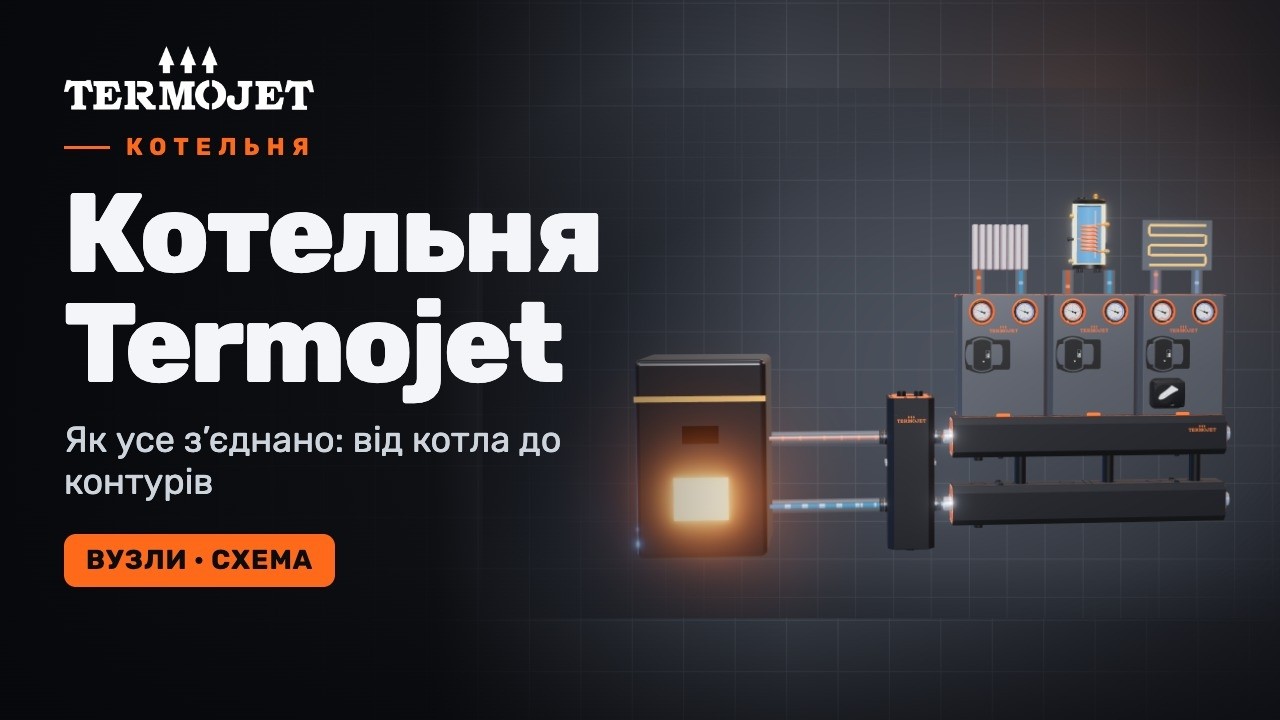
A distribution manifold is usually installed after the hydraulic separator, with pump groups for each circuit mounted on it. Instead of assembling the unit from separate parts, you can choose a manifold with a built-in hydraulic separator — it takes up less space and is quicker to install. How it all comes together into a ready-made boiler room is shown in the Termojet boiler room overview and in the article «A turnkey boiler room in one day».
Not sure which separator to choose for your boiler and number of circuits? Send us a diagram or a list of equipment via contacts — a Termojet engineer will help you choose.