Wired Zone Control System for Home Heating
Zone control lets you keep a different temperature in every room and stop heating empty spaces. We break down the wired system: the diagram, the equipment and the role of each component.
A typical heating system regulates the temperature of the whole house at once. This means heat can be wasted in rooms that are not in use at a given moment. A zoned heating system, by contrast, lets you control the temperature in individual zones or rooms of your home. You can set the system up exactly the way you need, taking into account each occupant's comfort preferences and how different rooms are used. In this way, zone control helps heat your home far more efficiently, delivering heat only when and where it is needed. This in turn reduces heating or cooling costs by 15–35% by switching off zones that are not in use at the moment.
There are two types of home zone temperature control systems: wired and wireless. In this article we focus on the features of the wired system.
How the wired system works
In a wired system, the components — controllers, thermostats, actuators and sensors — are connected to each other with cables. That is why it is best suited to new builds, where the interior finishing has not been done yet and cables can still be laid.
Wired zone control system diagram
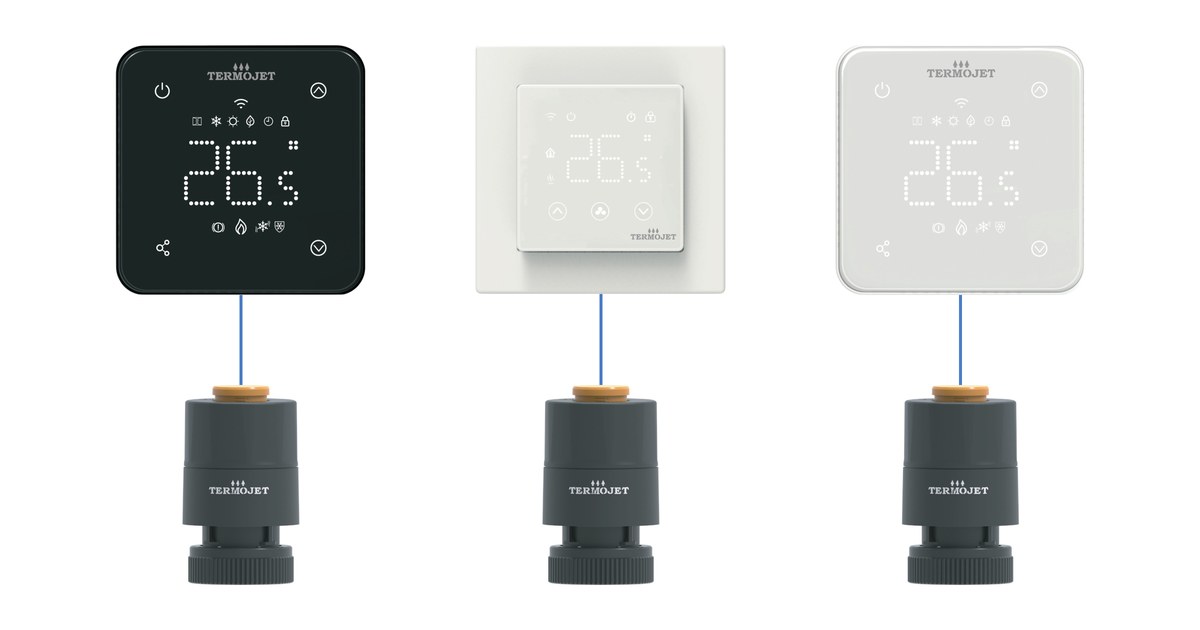
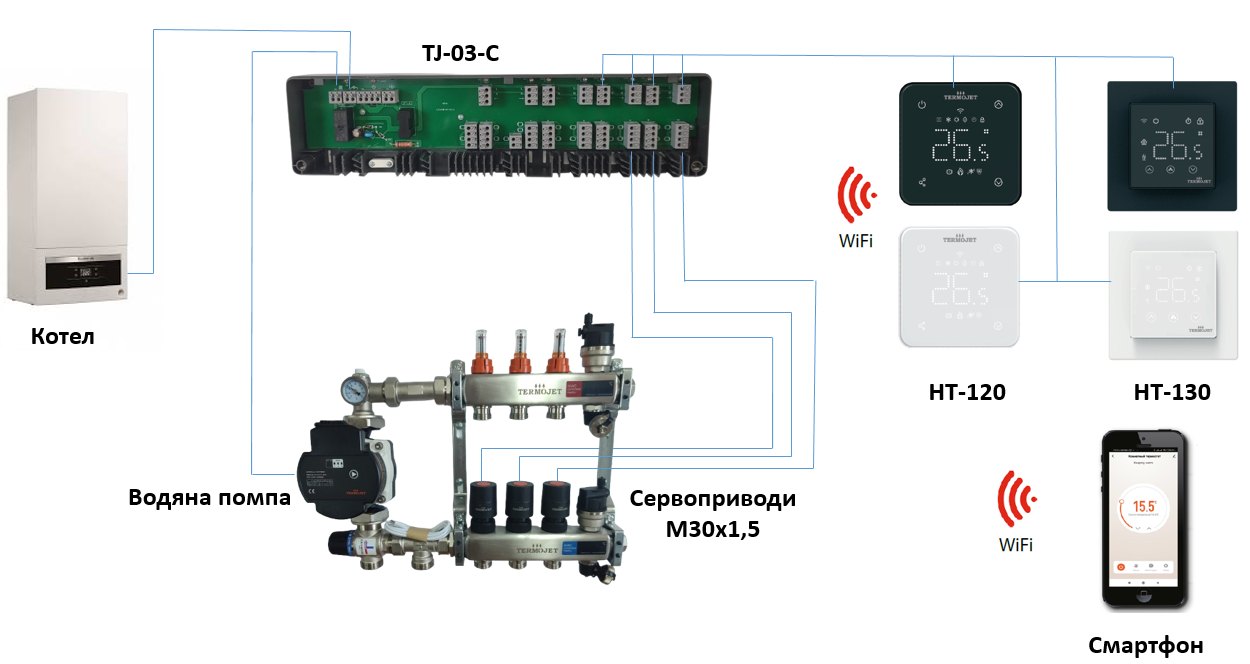
A typical wired zone control system looks like this:
Main components and their functions
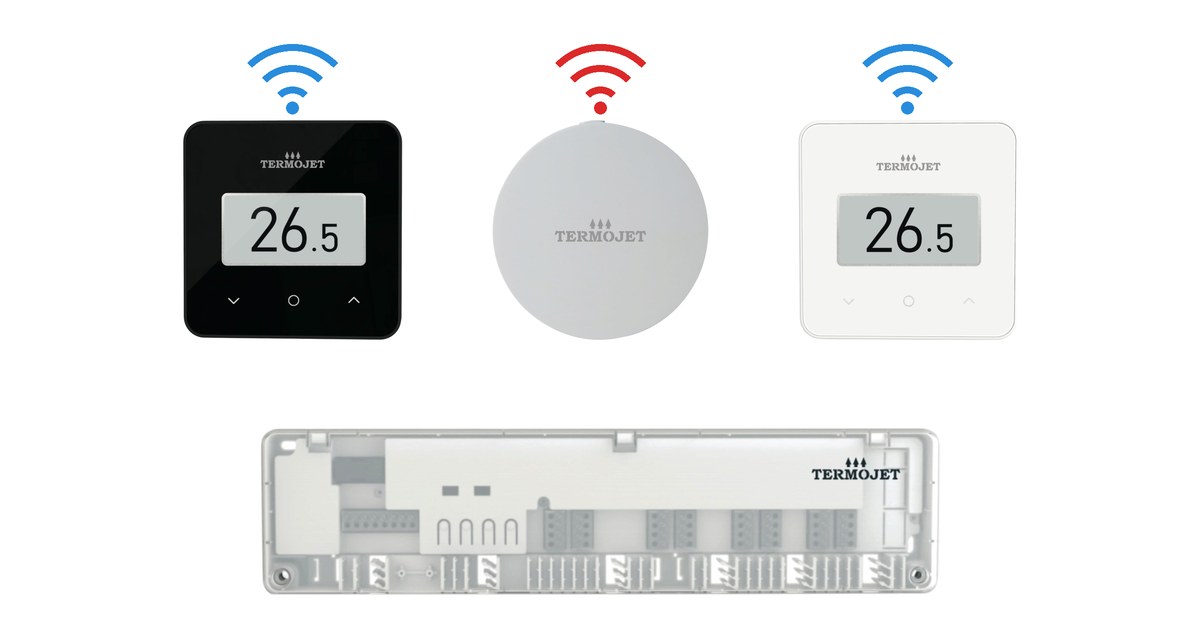
- TJ-03-C — 8-zone wired wiring centre. Provides zone temperature control by automatically operating the actuators, the circulation pump and the boiler. Supports up to 8 zones and up to 19 actuators.
- M30x1.5 actuators — provide smooth regulation of the heating water flow by operating the corresponding valves of the underfloor heating manifold.
- HT-120 and HT-130 — wired room thermostats. They precisely control the room temperature, connect to Wi-Fi and support remote control via the Smart Life app.
- Circulation pump — circulates the heating water; controlled by a ~230 V, 50 Hz electrical signal.
- Boiler — the heat source; controlled via a volt-free contact.
- Smartphone — remotely controls the wired zone control system via the Smart Life app over Wi-Fi.
Key takeaways
- A zoned heating control system provides individual temperature control in different zones, improving comfort for every occupant.
- Heat energy consumption drops by 15–35% because only the zones in use at the moment are heated.
- All control processes run automatically and remotely, which makes day-to-day operation very convenient.
Interior finishing already done and no wish to lay cables? Take a look at the wireless zone control system — it works without wires, over Zigbee and Wi-Fi. And if you are still choosing a heating type, read underfloor heating or radiators: which is better.