Reversible dirt separator Termojet Dn20 (3/4")
The Termojet DN20 (3/4") angled magnetic dirt separator combines effective heat-carrier purification with a compact 90° angled connection. The unit captures sludge, rust, and magnetite Fe₃O₄ through a…
per unit · payment on delivery or by invoice
Technical specifications
Description
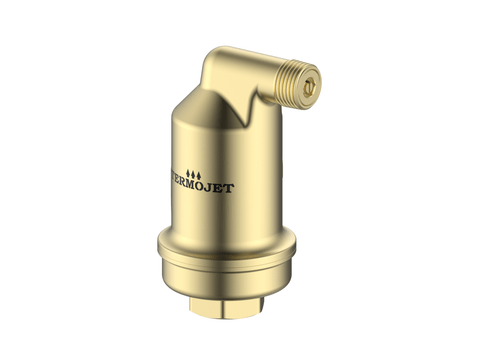
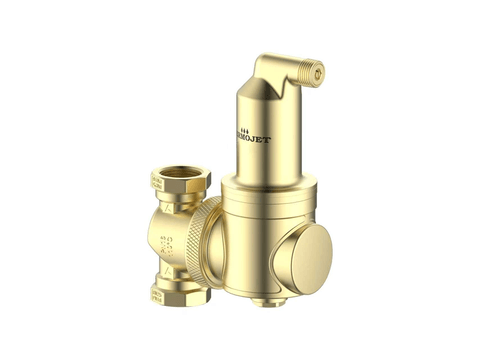
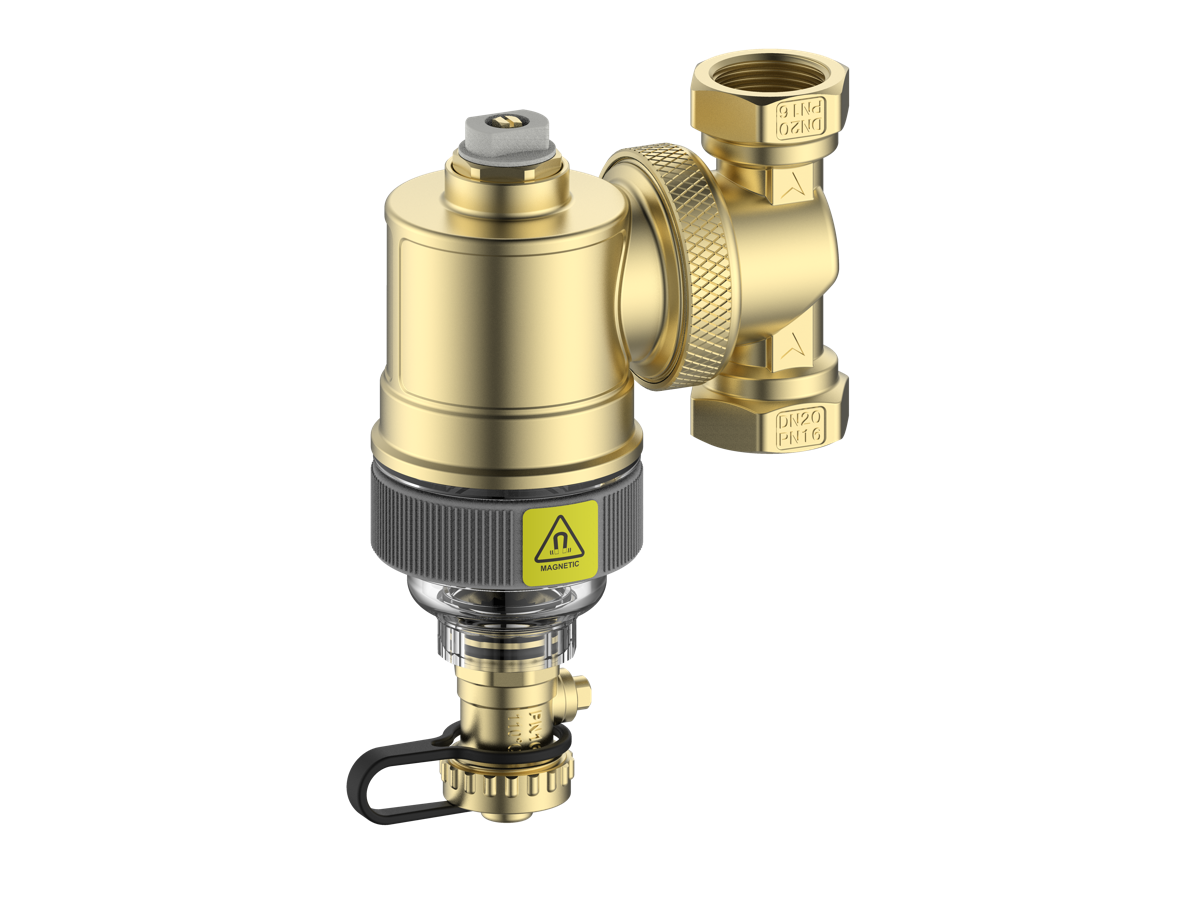
The Termojet DN20 (3/4") angled magnetic dirt separator combines effective heat-carrier purification with a compact 90° angled connection. The unit captures sludge, rust, and magnetite Fe₃O₄ through a dual mechanism — gravitational settling and a removable neodymium magnetic rod. The angled connection allows installation where a straight unit simply has no room: in narrow niches, compact boiler rooms, and wall cabinets.
Technical Specifications
How It Works: Dual Separation in a Compact Body
The heat carrier enters from below through the inlet port and flows into an expanded chamber where the flow velocity drops sharply. Large and heavy particles — sand, rust, mineral deposits — settle under gravity into the lower collection chamber. At the same time, the neodymium magnetic rod «pulls» magnetite Fe₃O₄ particles out of the flow: this black ferrous sludge from steel corrosion is so fine that ordinary gravitational separation cannot retain it. The purified heat carrier exits through the side port at 90° — this structural feature is what makes the separator angled. Draining the sediment is done through the bottom drain valve without stopping the system; cleaning the magnet means removing the rod, wiping off the black deposit, and reinserting it.
Where and How It Is Used
- Boiler room with limited installation space. If there is no straight pipe section of sufficient length between the piping nodes — the angled separator is installed at the elbow joint and solves the problem without re-routing the pipework.
- Wall cabinet or niche. DN20 (3/4") is the most common size for compact boilers up to 20–25 kW. The angled design fits into a standard cabinet beneath the boiler.
- Heat pump. Magnetite is the primary threat to the plate heat exchanger of a heat pump. If the system circuit uses DN20 pipes and installation space is limited — the DN20 angled magnetic separator becomes the ideal choice. For heat pump systems, see tjheatpump.com.ua.
- Gas boiler on the return line. Return water carries the most sludge from the system — the separator before the boiler intercepts contaminants before they reach the heat exchanger.
- Renovation of an old system. When upgrading the piping, the angled separator is easier to fit into the available space — no need to reposition adjacent components.
Advantages
- 90° angled connection. Solves installation where a straight separator does not fit — without re-routing pipes.
- Dual separation. Gravity retains sand and rust; the magnet captures magnetite. No type of contaminant passes through.
- Maintenance without stopping the system. The bottom drain valve opens at any time; the boiler and pump continue to operate.
- Brass body. A reliable material resistant to corrosion and heat carriers containing glycol additives.
Heat Pump and Magnetite: Why the Magnetic Separator Matters
Heat pump systems are especially vulnerable to magnetite. The black ferrous sludge formed by corrosion of steel radiators and pipes gradually clogs the narrow channels of the heat pump plate heat exchanger — heat transfer drops and the pump enters fault mode. A conventional dirt separator cannot retain magnetite: a magnetic insert is required. The DN20 angled magnetic separator reliably protects the heat exchanger and integrates well into a compact heat pump piping assembly. For more details, visit tjheatpump.com.ua.
Related Products
If space allows straight installation — consider the DN20 Dirt Separator (straight connection). If simultaneous air and dirt removal is required — the DN20 Air and Dirt Separator handles both tasks in a single body. Full range — in the Termojet separator catalogue.
Frequently Asked Questions
Why choose an angled separator when a straight one is available?
A straight separator requires a pipe section along one direction — inlet and outlet on the same axis. The angled unit changes the flow direction by 90°: inlet from below, outlet from the side. This is essential for installation at elbow joints, in wall cabinets and plant rooms where «turning» the pipework is difficult or impossible without dismantling adjacent components.
Is this separator suitable for underfloor heating?
Yes. DN20 (3/4") matches the standard supply pipes to the underfloor heating distribution manifold. A magnetic separator before the manifold protects the narrow floor circuit loops from sludge and magnetite, which is especially important in systems with metal pipes or in buildings with an old steel heating system.
Product reviews
No reviews for this product yet. Be the first!