Dirt separator Termojet Dn20 (3/4")
The Termojet DN20 magnetic dirt separator protects the boiler, pump, and pipelines from sludge, rust, and magnetite (Fe₃O₄) — the black ferrous sediment formed during corrosion of steel and cast-iron …
per unit · payment on delivery or by invoice
Technical specifications
Description
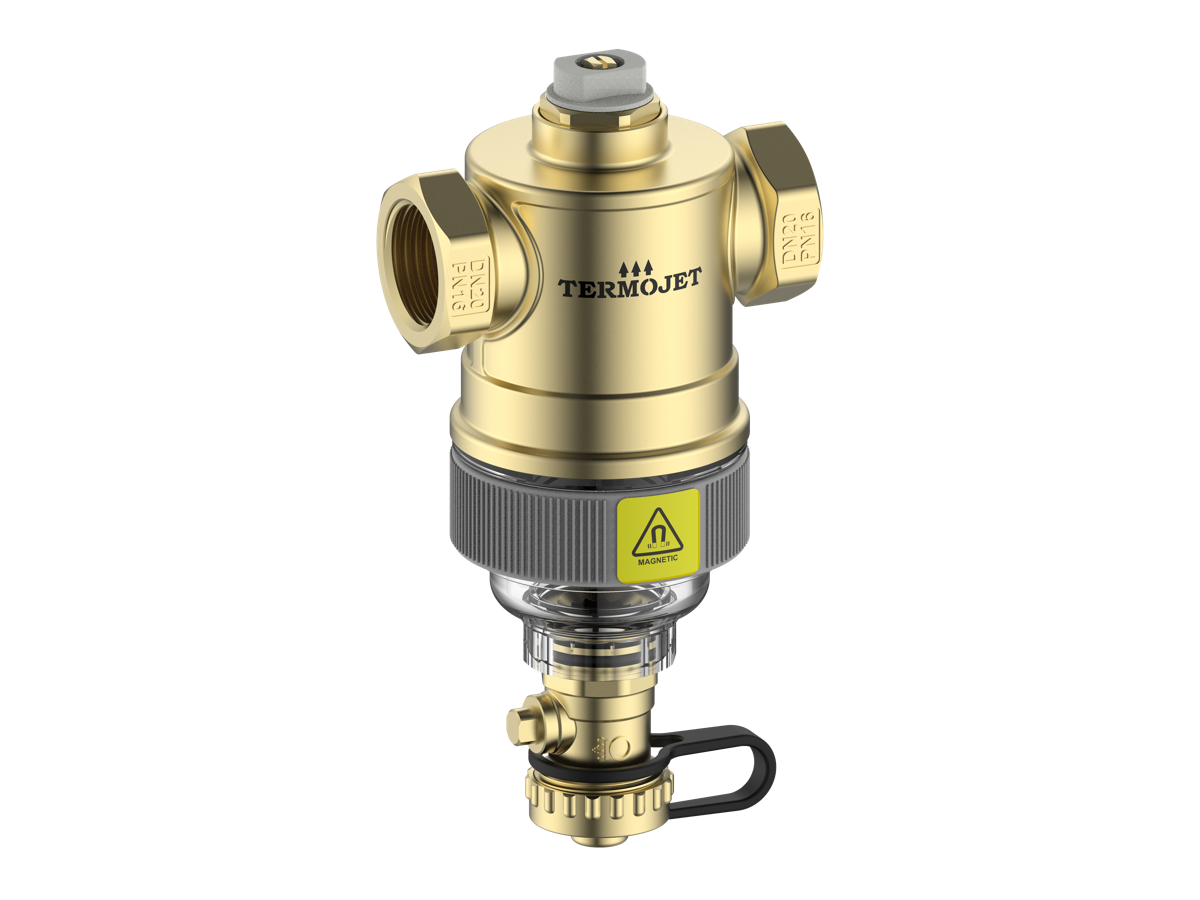
The Termojet DN20 magnetic dirt separator protects the boiler, pump, and pipelines from sludge, rust, and magnetite (Fe₃O₄) — the black ferrous sediment formed during corrosion of steel and cast-iron components of the system. Unlike conventional gravity filters, this separator has a built-in neodymium magnetic rod that captures ferromagnetic particles not catchable by sedimentation. It is installed on the return pipeline before the boiler or pump.
Technical Specifications
How It Works
The heat carrier enters the expanded separator chamber — the flow velocity drops sharply. Heavy non-magnetic particles (sand, scale, oxides) settle to the bottom under gravity. Simultaneously, the neodymium rod in the centre of the chamber "pulls" magnetite and fine ferrous particles directly from the flow — even those too light to settle. Thus, dual separation is at work: gravitational and magnetic. For cleaning: open the blowdown valve — sludge exits under pressure. The magnetic rod is removed, wiped clean of the black deposit, and reinserted — without stopping the system, in 30 seconds.
Where It Is Used
- Gas or solid-fuel boiler up to 20 kW. DN20 (3/4") is the typical diameter of the return pipeline in low-capacity domestic systems. Protects the boiler heat exchanger from sludge from the first day of operation.
- Underfloor heating. The polyethylene pipes of an underfloor heating circuit become contaminated with fine sludge quickly — the separator prevents clogging of the manifold and collector.
- New system after installation. The first 3–6 months are the most active period for installation debris discharge and initial corrosion. The separator collects this sediment, preventing it from reaching the boiler.
- System after flushing. After chemical or hydrodynamic flushing, fine sludge remains in the pipelines — the separator cleans the heat carrier in the first weeks after the procedure.
- Heat pump. Magnetite is the main threat to the plate heat exchanger of a heat pump (HP). More details on protecting systems with a heat pump at tjheatpump.com.ua.
Advantages
- Dual separation — gravitational and magnetic: retains both sand and magnetite, which a conventional separator lets through.
- Removable magnetic rod — cleaning without dismantling, without tools, without draining the heat carrier.
- Drain without stopping — the blowdown valve allows sediment to be removed while the system is running.
- Brass body — corrosion-resistant, withstands 110°C and 10 bar without deformation.
Magnetic Separator and Heat Pump
Systems with a heat pump require special protection. Magnetite — black ferrous sludge from corrosion — accumulates in the narrow channels of the HP plate heat exchanger and gradually reduces its efficiency up to emergency shutdown. A conventional dirt separator does not retain magnetite. Only a neodymium magnetic rod reliably "pulls" these particles from the heat-carrier flow. More details on comprehensive solutions for heat pumps at tjheatpump.com.ua.
Related Products
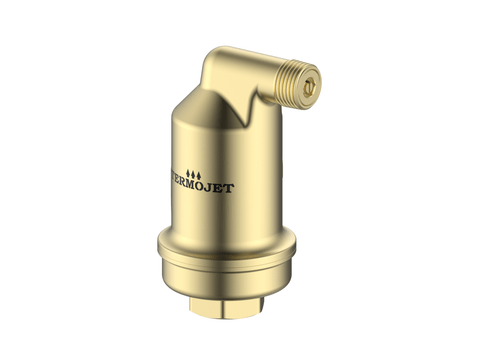
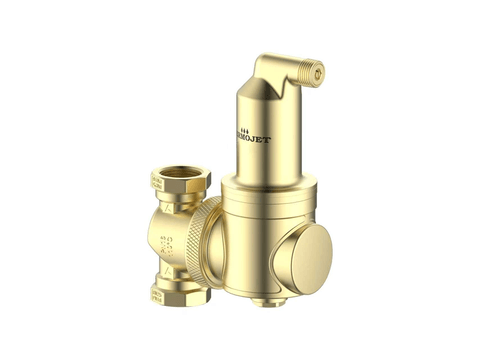
If simultaneous removal of air and dirt is needed — consider the Air and Dirt Separator DN20. For convenient installation in tight boiler rooms: Angle Dirt Separator DN20 with angled connection. The full range is in the Termojet separator catalogue.
Frequently Asked Questions
How does a magnetic separator differ from a conventional filter?
A mesh filter only retains particles larger than the mesh size. A dirt separator settles fine sludge by gravity — without a filter element that needs cleaning. A magnetic separator does both, and also captures magnetite Fe₃O₄ — a ferromagnetic deposit invisible to gravitational separation. It is the only way to remove magnetite from the heat carrier without a bypass and without stopping the system.
How often should the magnetic rod be cleaned?
First inspection — after 3–6 months of system operation (initial corrosion is active). Thereafter — once a year during scheduled maintenance. Procedure: remove the rod, wipe off the black deposit (magnetite), reinsert — 30 seconds without stopping the heating.
Product reviews
No reviews for this product yet. Be the first!