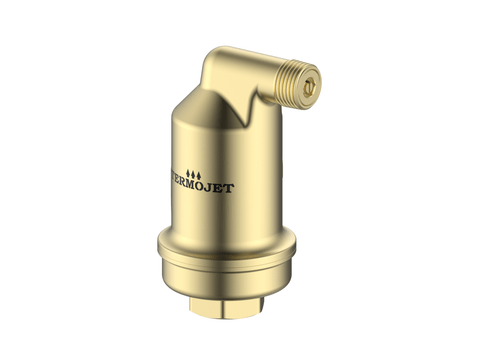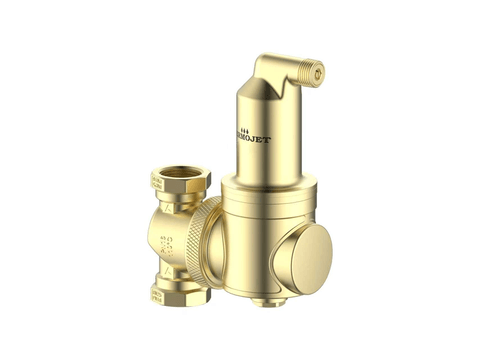
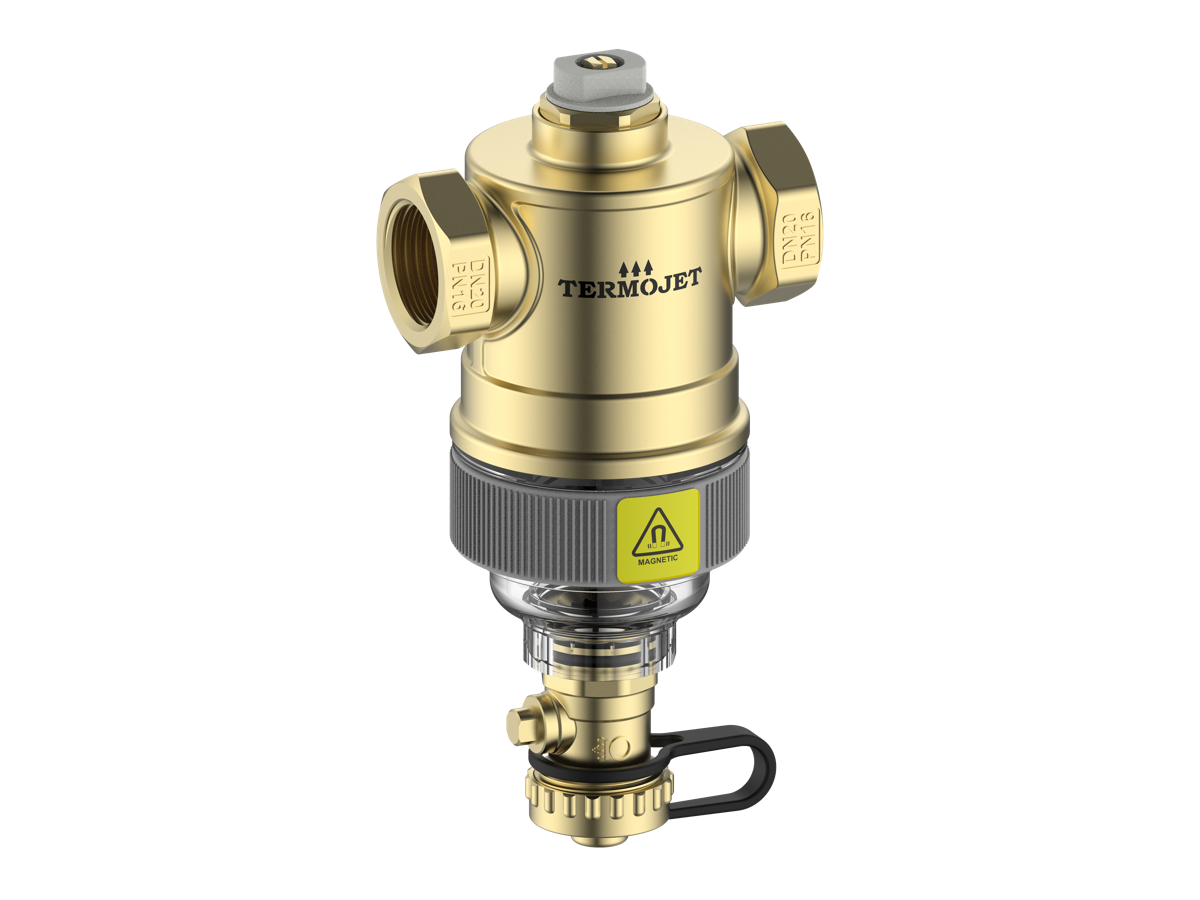
Dirt separator Termojet Dn32 (1 1/4")
The Termojet DN32 (1 1/4") magnetic dirt separator is designed to protect medium- and above-medium-output heating systems from sludge, rust, and magnetite. The device combines two cleaning mechanisms:…
per unit · payment on delivery or by invoice
Technical specifications
Description
The Termojet DN32 (1 1/4") magnetic dirt separator is designed to protect medium- and above-medium-output heating systems from sludge, rust, and magnetite. The device combines two cleaning mechanisms: gravitational settling of particles in the expanded chamber and capture of magnetite Fe₃O₄ by a removable neodymium magnetic rod. Installed on the return pipe before the boiler, heat pump, or circulation pump.
Technical Specifications
How It Works: Dual Separation
The heat transfer fluid enters the separator body and reaches a chamber with a larger cross-section. The flow velocity drops sharply — sand particles, mineral sediment, and corrosion products settle to the bottom by gravity. At the same time, the neodymium magnetic rod installed in the chamber attracts magnetite particles (Fe₃O₄) — black ferrous sludge that is too light and fine to settle on its own. This black deposit forms during the corrosion of steel pipes, radiators, and boiler heat exchangers. Sediment is drained via the bottom valve without stopping the system; the magnetic rod is removed, cleaned of adhering particles, and replaced — without disassembling the separator.
Where and How It Is Used
- Boiler with output of 30–60 kW. DN32 matches the standard pipework connections for boilers in this class. Protecting the heat exchanger from sludge and magnetite extends the boiler's service life and reduces maintenance costs.
- Circulation pump. The pump is sensitive to abrasive particles — sludge in the seals and impeller accelerates wear. The separator before the pump eliminates this cause of failures.
- Heat pump. Heating systems with a heat pump (HP) in buildings over 150 m² are often built with DN32 pipework. Magnetite is critically dangerous for the HP plate heat exchanger — and a magnetic separator is the only reliable protection. More about heat pump systems at tjheatpump.com.ua.
- New heating system. During the first months of operation, intensive corrosion of new steel elements produces large amounts of magnetite. The separator protects the equipment during the most vulnerable period.
- Boiler room with multiple circuits. On the common DN32 return manifold, the separator cleans the heat transfer fluid from all circuits — radiators, underfloor heating, boiler — before returning to the boiler.
Advantages
- Dual cleaning mechanism. Gravity separation + magnetic capture — comprehensive protection against all types of solid contamination.
- Flow capacity of 5,0 m³/h. Sufficient for medium-output boiler systems without excessive hydraulic resistance.
- Drain without stopping the system. The valve at the bottom of the body opens at any time — heating continues to operate during maintenance.
- Removable magnetic rod. Cleaning takes less than a minute — the rod is removed, wiped clean of the black magnetite deposit, and put back.
Heat Pump and Magnetite: Why a Magnetic Separator Is Essential
Systems with a heat pump require special protection. Magnetite — black ferrous sludge from corrosion — accumulates in the narrow channels of the HP plate heat exchanger and gradually reduces its efficiency. A conventional dirt separator does not retain magnetite: a magnetic insert is required. Install the magnetic separator on the return pipe before the HP heat exchanger and the heat exchanger will serve its full design life. More at tjheatpump.com.ua.
Related Products
If the system requires simultaneous air and dirt removal, choose the Air and Dirt Separator DN32: two tasks in one body. Where installation space is limited, consider the Angled Dirt Separator DN32 with 90° connection. Full range in the Termojet separator catalogue.
Frequently Asked Questions
Why is a magnetic separator particularly important for DN32?
Systems with DN32 pipework typically serve buildings with radiator heating or mixed circuits, where a significant proportion of the pipes are made of steel. Corrosion of steel elements actively generates magnetite — and in higher-output systems with higher heat transfer fluid flow rates, this sludge circulates more intensively. Without a magnetic separator, magnetite accumulates in the boiler, HP heat exchanger, or pump — leading to premature wear.
How does the DN32 separator fit into the boiler connection?
The separator is installed on the return pipe between the system and the boiler, pump, or heat exchanger. The G 1 1/4" threaded connection matches the standard ports of boilers and hydraulic distributors of the corresponding size. It is recommended to install vertically with the body facing down — for better sediment accumulation in the lower compartment.
Product reviews
No reviews for this product yet. Be the first!