Dirt separator Termojet Dn25 (1")
The Termojet DN25 (1") magnetic dirt separator is a dual-action device for protecting heating systems from solid particles and ferrous sludge. It combines classic gravity separation with a powerful ne…
per unit · payment on delivery or by invoice
Technical specifications
Description
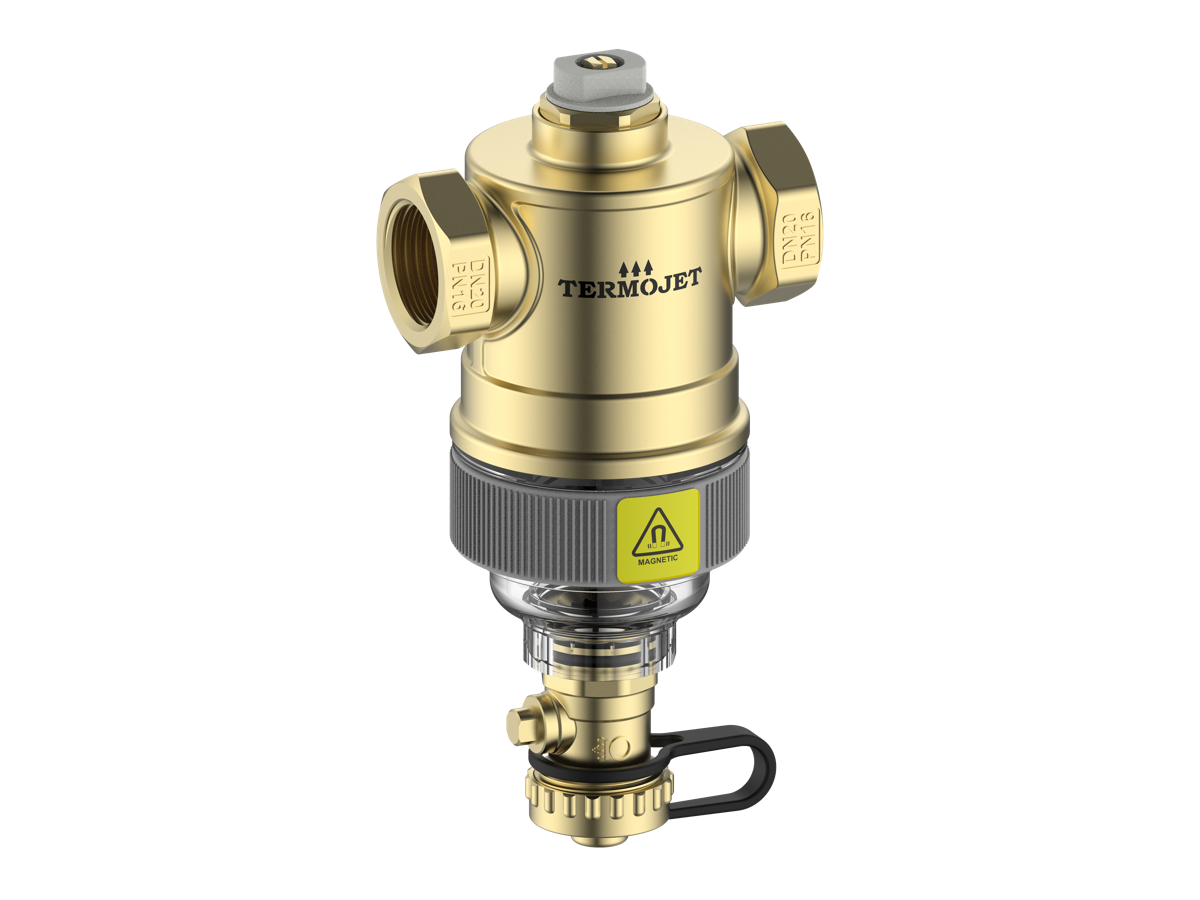
The Termojet DN25 (1") magnetic dirt separator is a dual-action device for protecting heating systems from solid particles and ferrous sludge. It combines classic gravity separation with a powerful neodymium magnetic rod, capturing not only sand and rust but also magnetite Fe₃O₄ — particles that a conventional separator lets through. Installed on the return pipe before the boiler, pump, or heat pump heat exchanger.
Technical Specifications
How It Works: Dual Separation
The heat transfer fluid enters the expanded separator chamber, where the flow velocity drops sharply. Heavy particles — sand, rust, deposits — settle by gravity into the bottom collector. At the same time, the neodymium magnetic rod placed inside the chamber attracts magnetite particles (Fe₃O₄): this black ferrous sludge from the corrosion of steel pipes and radiators is too fine and light to settle on its own, but instantly adheres to the powerful magnet. The result is two-stage fluid purification in a single pass. Servicing requires only removing the rod, wiping off the black coating, and reinserting it; draining the accumulated sediment is done via the bottom drain valve without stopping the system.
Where and How It Is Used
- Gas or solid-fuel boiler. The separator is installed on the return pipe before the boiler and prevents sludge and magnetite from entering the heat exchanger and burner — the boiler clogs less frequently and lasts longer.
- Heat pump. The plate heat exchanger of a heat pump (HP) has narrow channels where magnetite accumulates especially quickly. Even minor deposits reduce heat transfer and put the pump into emergency mode. The DN25 magnetic separator — the standard size for most residential HPs — provides reliable protection. More about protecting heat pump systems at tjheatpump.com.ua.
- New system after installation. During the first months of operation, new steel pipes and radiators corrode actively — magnetite is released intensively. The separator protects the equipment from day one.
- Old system after flushing. Even after flushing, residual sludge and magnetite continue to circulate. The separator captures the residues and maintains fluid cleanliness.
- Underfloor heating. The narrow pipes of floor circuits are sensitive to any contamination — the separator before the manifold prevents loop clogging.
Advantages
- Dual separation. The magnet captures magnetite, gravity handles everything else. No type of contamination gets through.
- Servicing without system shutdown. Draining sediment via the bottom valve takes 10–20 seconds; the system continues to operate normally.
- Easy magnet cleaning. The rod is removed, wiped clean of magnetite, and reinserted — no tools, no disassembly.
- Reliable brass body. Corrosion-resistant, withstands prolonged operation at 110°C and 10 bar pressure.
Heat Pump and Magnetite: Why It Matters
Systems with a heat pump require special protection. Magnetite — black ferrous sludge from corrosion — accumulates in the narrow channels of the plate heat exchanger and gradually reduces its efficiency. A conventional dirt separator does not retain magnetite. Only a magnetic insert — a powerful neodymium rod — "pulls" these particles out of the heat transfer fluid flow. Install the magnetic separator on the return pipe before the HP heat exchanger and the heat exchanger will serve its full design life. More about heat pump systems at tjheatpump.com.ua.
Related Products
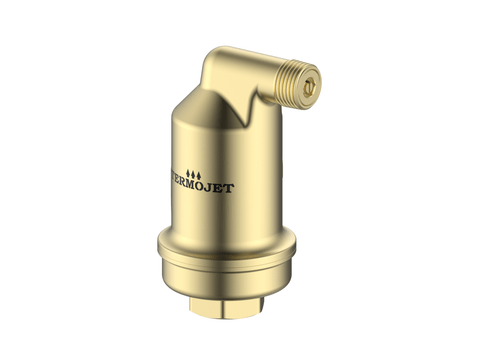
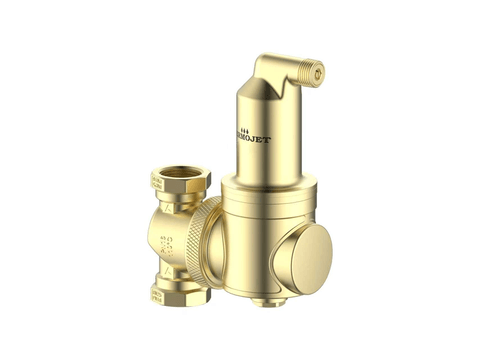
If the system requires simultaneous air and dirt removal, consider the Air and Dirt Separator DN25. For installation in a tight boiler room or where space between pipes is limited, the Angled Dirt Separator DN25 connects at 90° and requires no straight pipe section. Full range in the Termojet separator catalogue.
Frequently Asked Questions
What is the difference between a magnetic separator and a conventional one?
A conventional dirt separator uses only gravity: particles settle because they are heavier than water. Magnetite Fe₃O₄ is too fine and light to settle on its own, so a conventional separator lets it through. The neodymium rod in a magnetic separator attracts these particles regardless of their size and weight. That is why a magnetic separator is required for systems with steel pipes and radiators, especially with a heat pump.
How often should the separator be cleaned?
First inspection — 3–6 months after start-up, especially for new or recently flushed systems. Thereafter — once a year during routine maintenance. If a large black deposit is found on the magnetic rod during inspection, increase the inspection frequency.
A dirt separator goes in front of the boiler so that sludge never reaches the heat exchanger or the pump — for example in the hookup of the 15 kW Termojet Ignis Pro 15 Plus pellet boiler.
Product reviews
No reviews for this product yet. Be the first!